

As we made our way through the songs on the Americana playlist, Mike Wolf’s Petoskey garage was bustling. David ran the meat grinder, scrap bag for his dogs at his feet, and Allison perfected the art of placing just enough of her body weight on the vacuum sealer, ensuring a perfect seal. I worked my way around the doe, carving and cutting. Mike offered welcomed instruction while handing me the right tools for the job. Deer processing takes time and energy. Not going it alone helps. Before long, I was viscerally aware of the weight of gratitude and indebtedness I carried. I felt it in my forearms as I hoisted a cardboard box, heavy with choice cuts and ground venison.
“You guys should take some,” I offered. A small gesture, but it was all I could do.
Allison smiled. “Nope, that’s your deer.”
David grinned and responded wryly, “I think we’ll manage.”
Later that evening, I pulled out of the driveway. The night sky called for reflection quite naturally. The entire box, filled to the brim, sat in the trunk.
Late summer of 2023, I decided to make a call. With a two-year-old and a two-month-old, adding to our family’s plate was risky business, but curiosity about the Tip of the Mitt New Hunters Guild won out. I was interested in hunting and had processed some deer with a buddy here in town, but other than that, I had no experience to speak of.
After a bit of phone tag, Mike picked up. He coordinates the guild along with Zach Ward. It’s not a full-time gig for him. Actually, it’s not a gig at all—it’s more a labor of love. I called expecting details about a curriculum, maybe a list of dates and locations. Instead, I found someone on the other end of the line open to listening. Mike was curious to know a bit about me: my interest, my experience level, and what I might be looking for. I realized he was working out how to support me in an individualized process tailored to my background and intentions, something uniquely offered to each guild participant. There was no set curriculum—just a welcome into a grassroots mentorship network.
He didn’t just listen. Mike knew I was interested in hunting on our land, so he visited and hiked the property with me, with an eye on wildlife patterns and mind on a plan. Without his reminding, I wouldn’t have found my seat weeks later, setting my bag on a wooden table carved with decades of initials, sticking out a bit amongst the kids at hunter’s safety. I wouldn’t have ventured out to the guild’s shooting range days, a space for developing muscle memory, asking questions, and learning through experience.
Mike had been a beginner at one point, too. He didn’t grow up in a hunting household. Mentorship opportunities with friends while living out West sparked his interest. Elk retrieval memories, hauling 80lb hind quarters in backpacks, tend to stick around. He encountered something primal and powerful in the act; something potent in working communally to achieve a goal. Now, after stepping out of his comfort zone as an adult, he’s been hunting for some fifteen years. And when he shows up to a hunting association board room to speak on behalf of the guild, you can find his Prius waiting in the parking lot.
On the other hand, his collaborator Zach has deep hunting roots, a generational connection, and a steady wealth of knowledge—a fitting balance to Mike’s relative newness and passionate curiosity. If you have a gun question, find Zach. He’ll roll up on his motorized chair with treads, and along with his answers, you’ll sense an ability to inspire and warm up a room. He hunts independently, without the use of his legs, consistently pushing the bounds of possibility. He and Mike have been collaborating on the program for six years, supporting a growing web of folks, largely facilitated by a text thread.
The New Hunters Guild had been modeled after a national program — QDMA’s Field to Fork initiative—but Mike sensed something important was missing. The QDMA process was largely one-off event-based, in the spirit of “show up, complete these ten stations, here’s your certificate, and now you’re a hunter.” While that is helpful, Mike envisioned a year-round, ongoing network where people could show up for each other, regardless of abilities and stereotypes, and grow more confident over time.
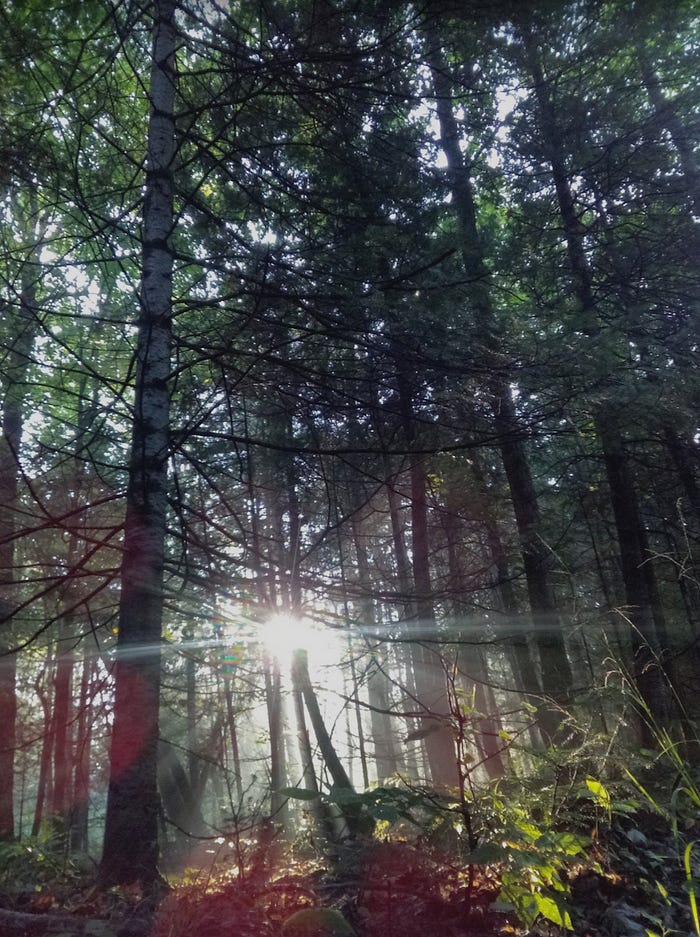
Two months ago, he and I sat together in a blind on the outskirts of Boyne City. A warm evening—I had a crossbow; he had a book. Mike wasn’t there to hunt. He was showing up for me. Deer showed up, too. Most I didn’t feel comfortable taking. As the evening went on, I questioned my hesitancy to shoot. My attention shifted from the stillness outside to the person sitting beside me. Was I wasting his time? Mike spoke to my unvoiced question. No pressure. No need to shoot. I had his support.
As it grew close to the end of the evening, a more suitable doe presented herself in a more suitable spot. I took a deep breath and bent my finger. The bolt flew. I had worried before that this moment would feel like a mistake. It didn’t. It felt tender, but right. I sensed connection. Like W.S. Merwin’s poem Thanks: dark though it was, I was saying thank you. I had a deep, deep sense of gratitude. I understood the positive benefits of hunting upon the deer population in general, which is very different than considering ending the life of a specific doe. But I didn’t encounter that ending. The life of that deer continues. That deer is in this writing; that deer is moving my hands. I am saying thank you, and I still feel the weight of a debt I can’t pay. After I took the shot, I felt from that doe the same words, nod, and smile that David would offer later: “I think we’ll manage.”
A month after I shot that deer, Allison shot hers. Mike did the same. David will be hunting the Jordan River Valley. The process continues.
There’s an invitation to show up for and with each other here in Northwest Michigan. No specific background or skill-set required — you just gotta make the call.
To learn more about the Tip of the Mitt New Hunters Guild, you can reach out to Mike at newhuntersguild@gmail.com or visit the New Hunters Guild Facebook page.